Skip to content
The Junagadh Municipal Water Supply Department aimed to modernize its aging water distribution infrastructure by implementing a centralized smart monitoring and automation platform. The primary objective was to enhance operational visibility, minimize water losses, optimize pumping efficiency, and ensure uninterrupted water supply across the city.
By integrating the AdiNexus Industrial IoT Gateway with the AdiCloudX IoT-based cloud platform, the entire municipal water supply network serving approximately 465,000 residents and handling 43 million liters per day was transformed into a fully connected digital ecosystem. The deployment enabled real-time centralized monitoring and control of critical water infrastructure, including reservoirs, pumping stations, flow meters, pressure zones, and distribution pipelines, significantly improving system reliability and operational efficiency.
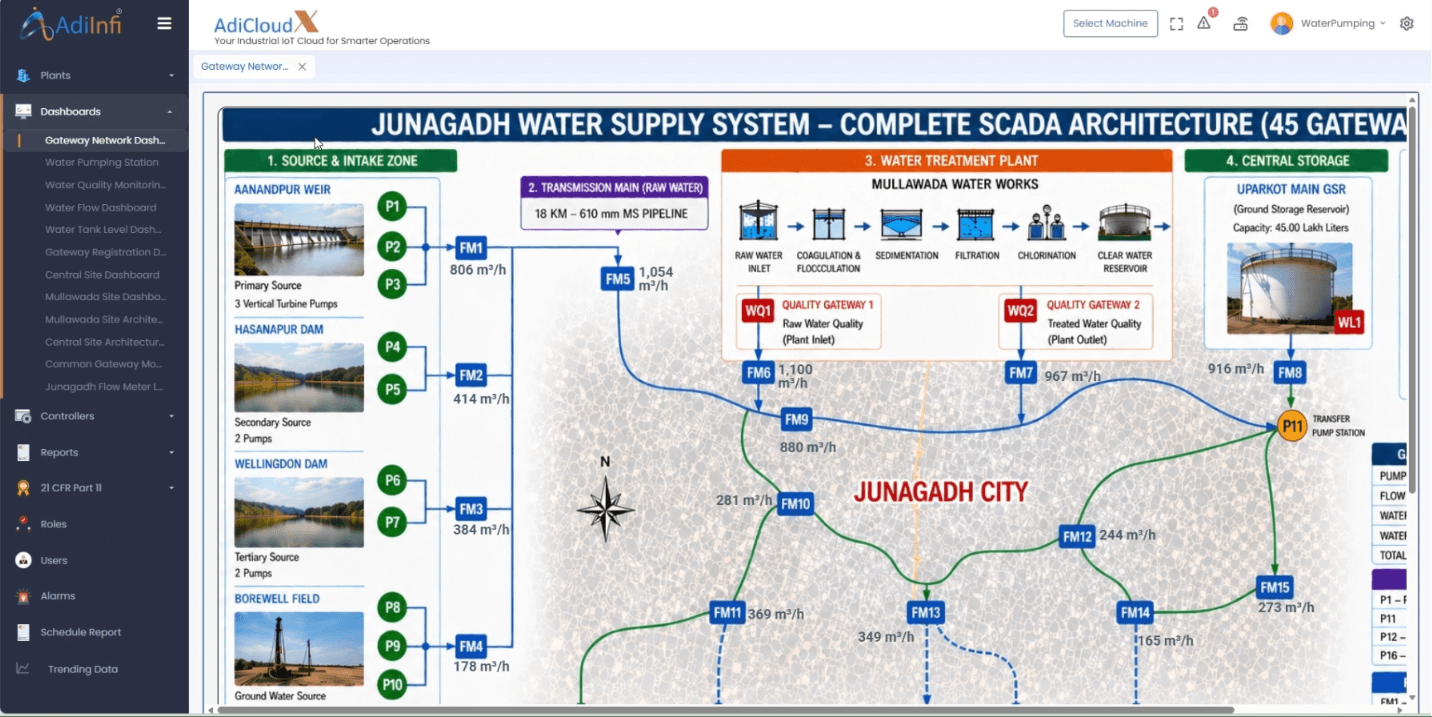
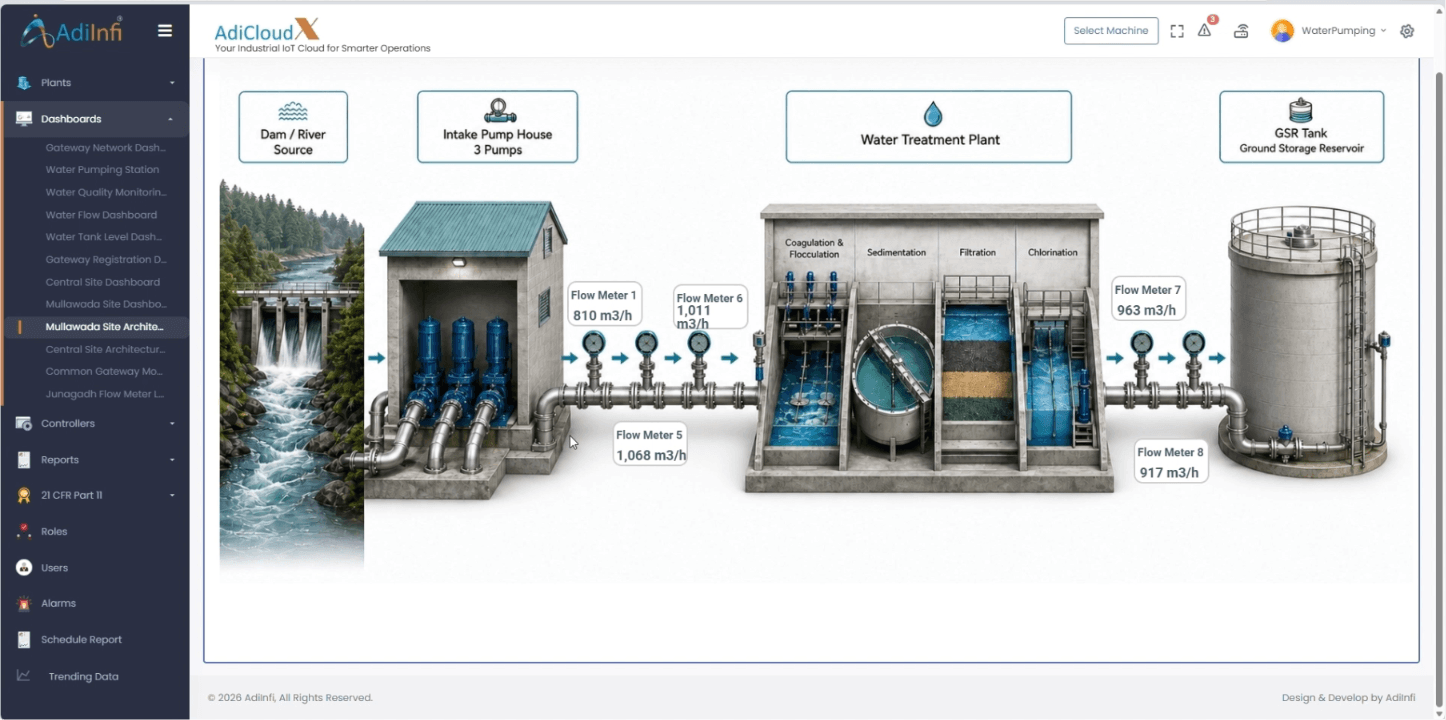
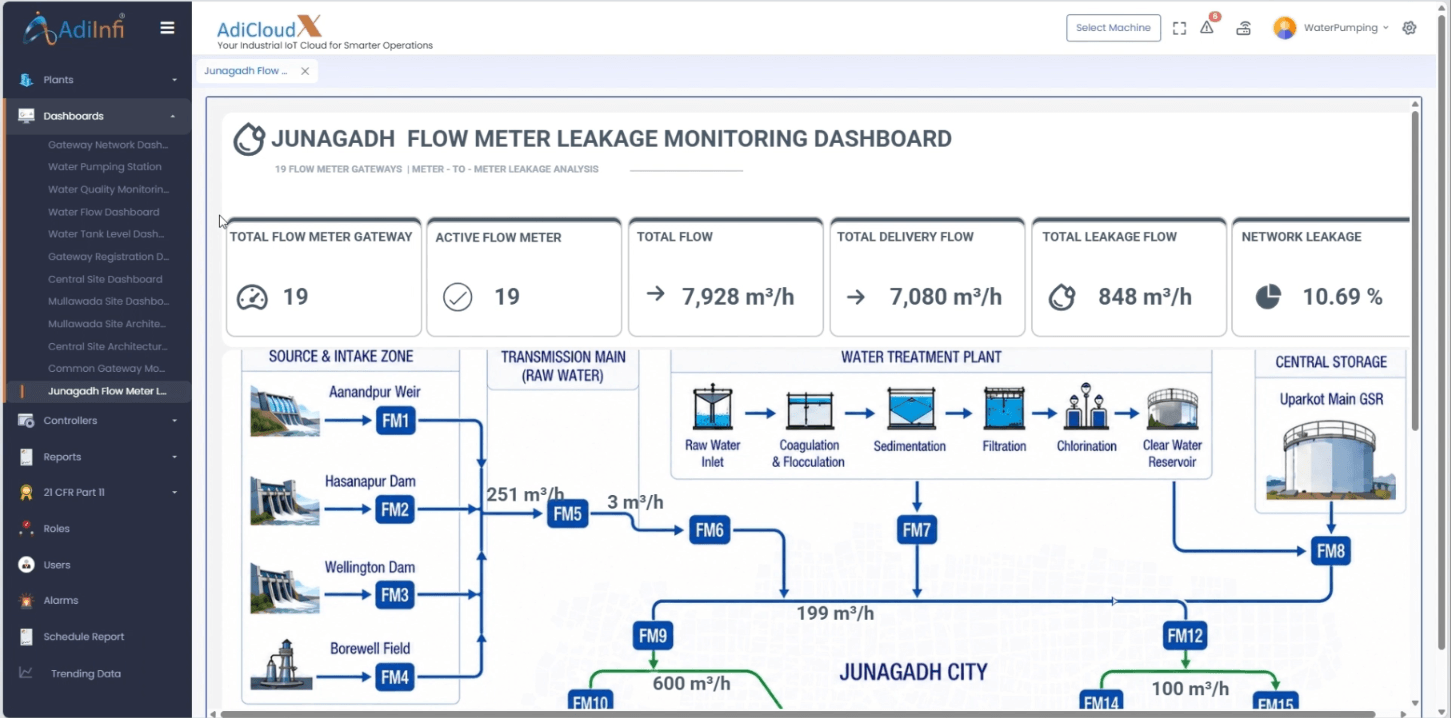
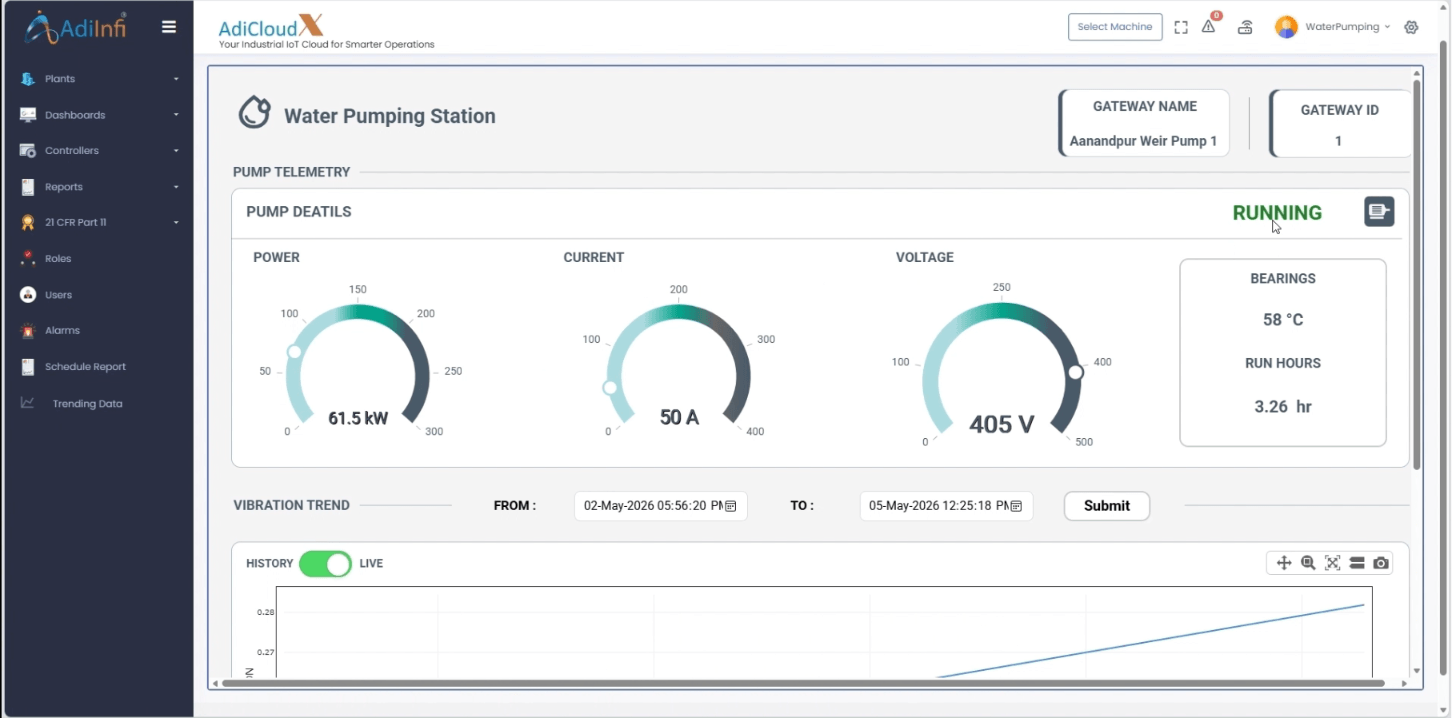
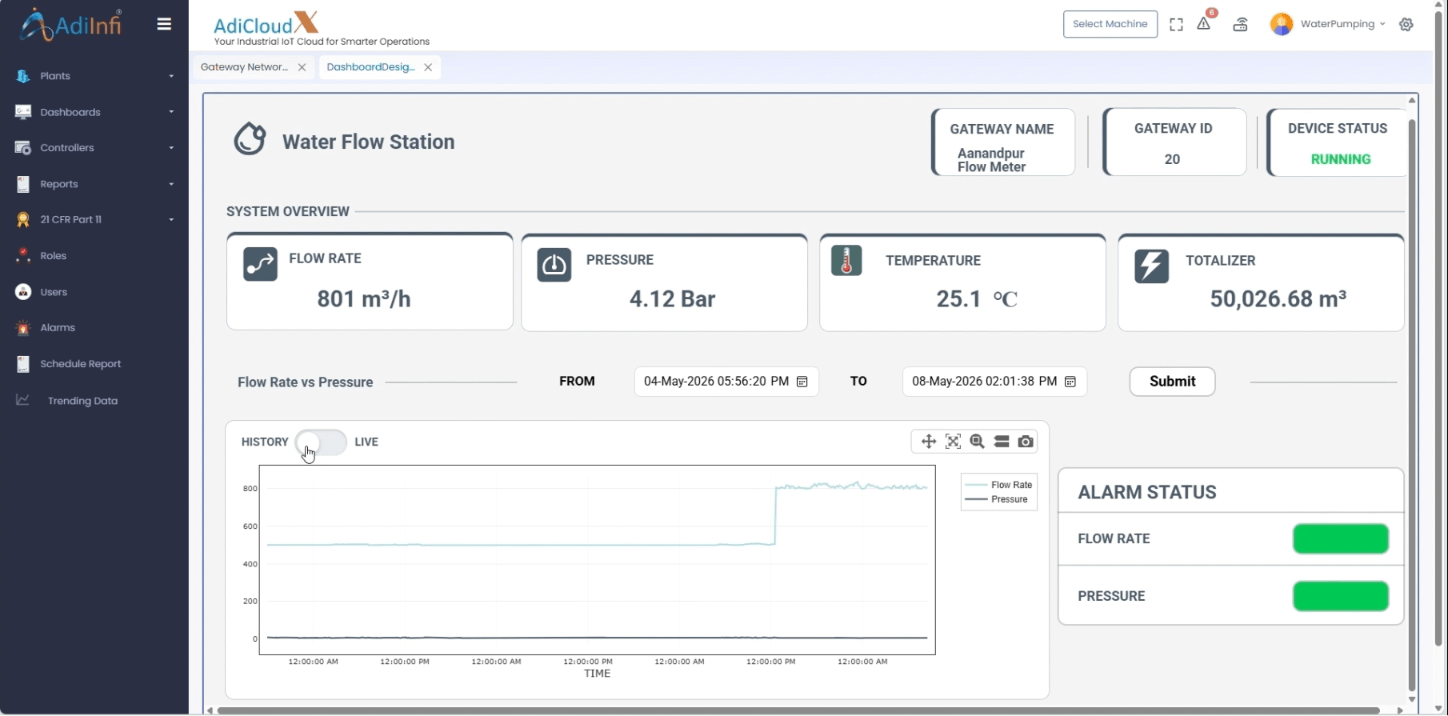
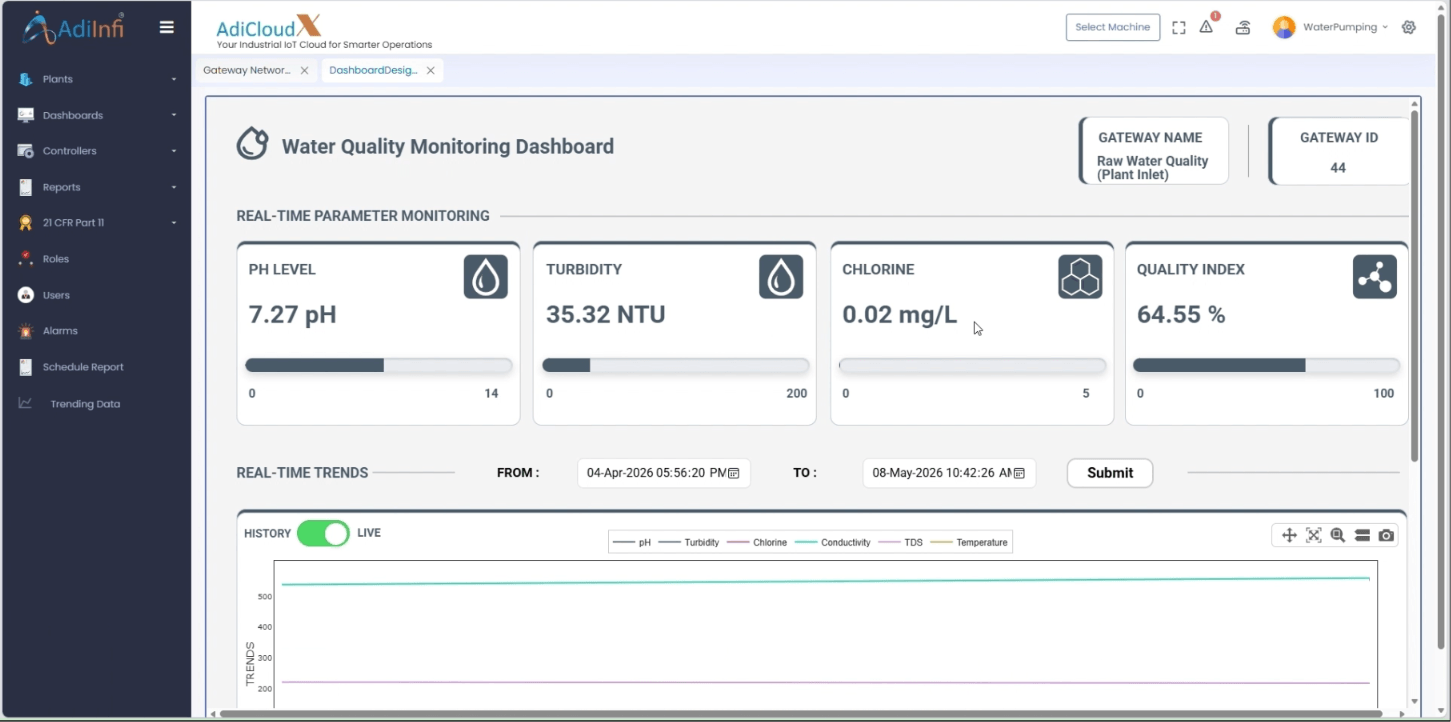
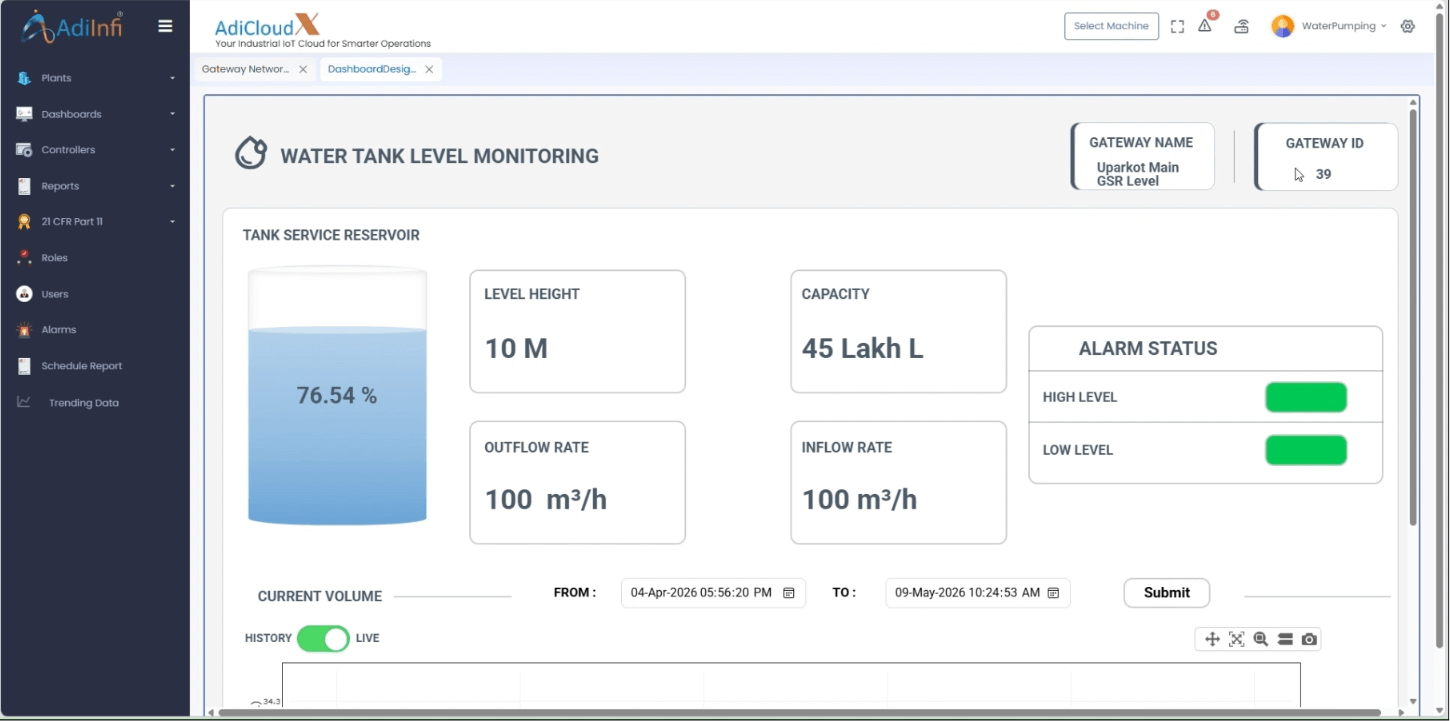
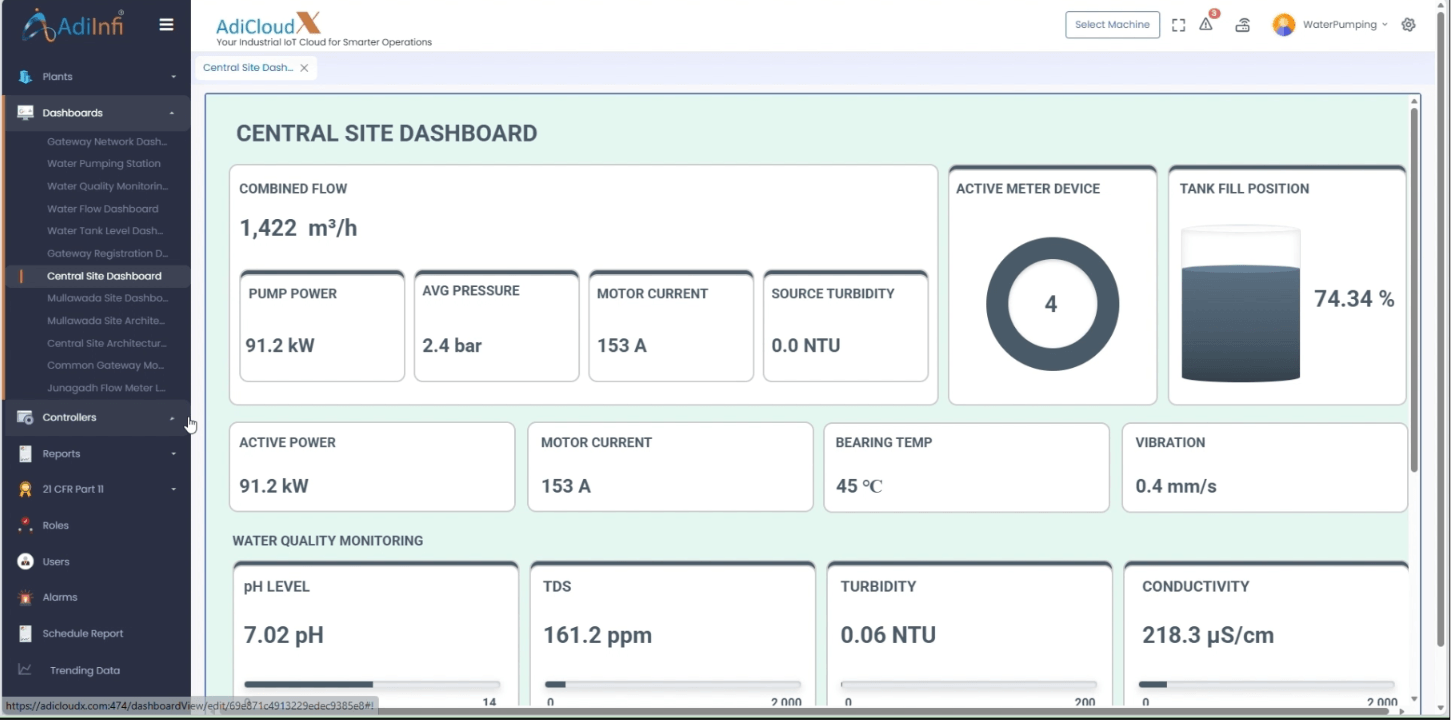
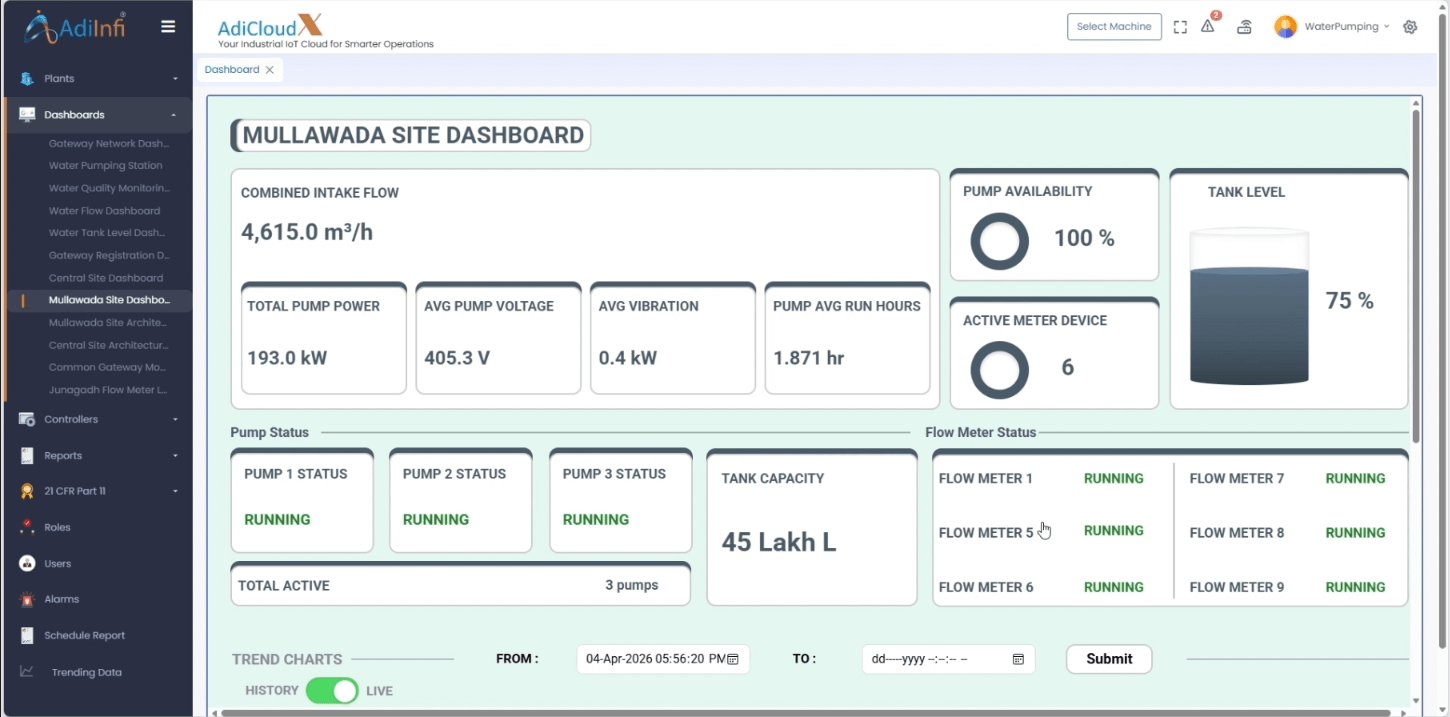
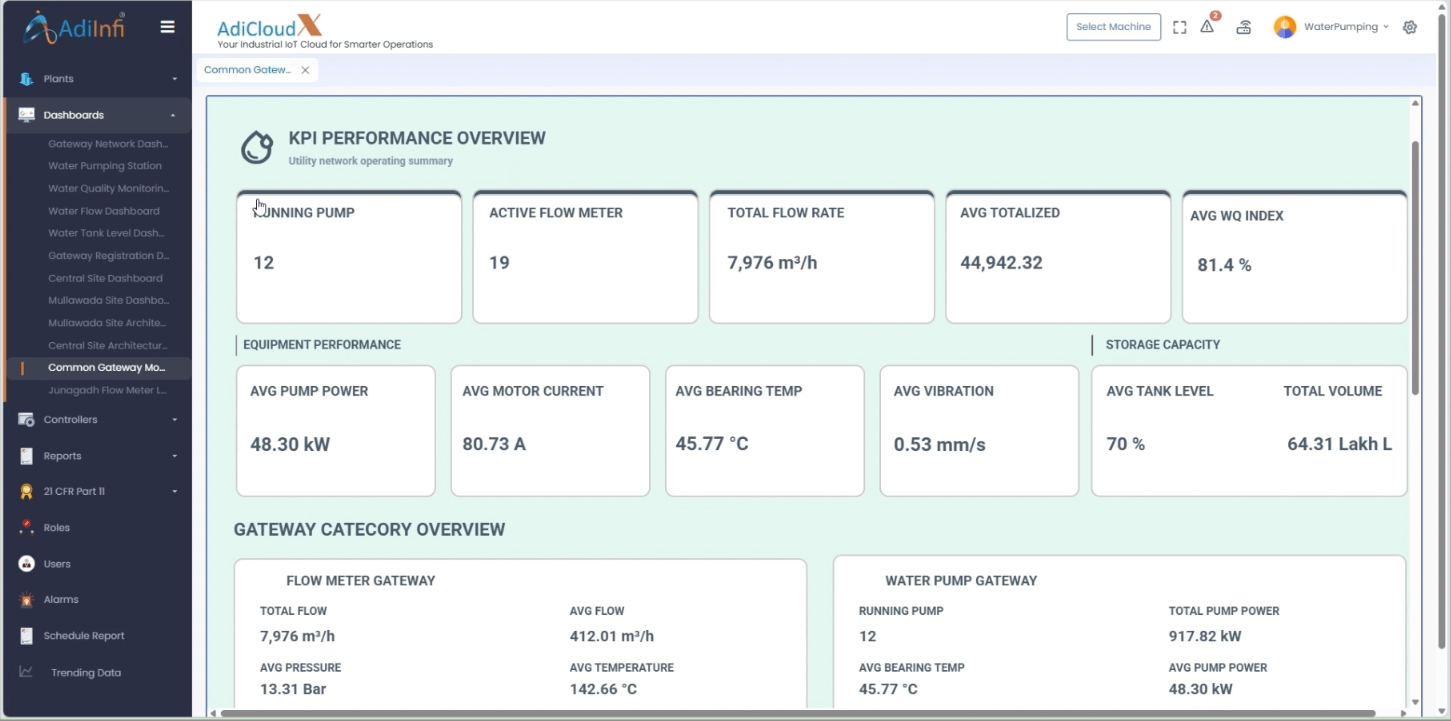
Water Distribution System Overview
Pumping Stations (Pump Houses)
Pumping stations play a vital role in transferring water between reservoirs and distribution zones across the city.
- Real-time monitoring of pump runtime, motor health, pressure, voltage, and current
- Automated pump scheduling for optimized operation and energy efficiency
- Remote control and operational management from the central control room
- Ensures stable and consistent water pressure across the entire distribution network
Flow Meter Monitoring System
Flow meters installed at key distribution points provide accurate measurement of water movement across the network.
- Continuous measurement of water flow in real time
- Consumption analytics for demand assessment and network balancing
- Identification of water losses and non-revenue water (NRW) zones
- Historical data analysis for reporting and performance optimization
Underground & Overhead Reservoirs
Reservoirs serve as critical storage points for treated water before distribution to end users.
- Continuous monitoring of water levels, inlet/outlet flow, and overflow conditions
- Ensures balanced water availability during peak demand periods
- Automated alerts for high-level and low-level conditions
- Integration with remote level sensors for accurate real-time visibility
Distribution Pipeline Network
The pipeline network forms the backbone of city-wide water distribution across multiple municipal zones.
- Real-time monitoring of pipeline pressure and flow conditions
- Early detection of leaks, pressure drops, and abnormal consumption patterns
- Improved visibility into zone-wise distribution performance
- Faster response to faults and supply disruptions through centralized alerts
Challenges Before AdiNexus Implementation
Before the adoption of AdiCloudX integrated with AdiNexus Industrial IoT Gateway, the Junagadh municipal water supply system was operating with limited automation and fragmented monitoring capabilities. This resulted in several operational inefficiencies and infrastructure management challenges.
Manual Monitoring & Reporting
The majority of operational data was collected and recorded manually, which significantly impacted system efficiency.
- Delayed reporting and decision-making processes
- High risk of human data entry errors
- Limited real-time operational visibility
- Lack of reliable historical performance records for analysis
Pumping Station Downtime Not Tracked
System failures and pump interruptions could not be effectively analyzed or traced, leading to operational uncertainty.
- Difficulty identifying the exact source of system failure
- No accurate tracking of downtime duration
- Lack of clarity on root causes of pump or system faults
- Delayed maintenance response due to missing diagnostics
Inefficient Water Distribution Analysis
Without real-time data acquisition and analytics, overall distribution efficiency could not be properly evaluated or optimized.
- Inability to monitor pump performance in real time
- No visibility into reservoir utilization patterns
- Lack of energy consumption analysis for pumping operations
- Poor pressure balancing across different distribution zones
Water Leakage & Pressure Issues
The absence of intelligent monitoring systems led to inefficiencies in detecting and controlling water losses.
- No automated detection of pipeline leakage
- Unmonitored pressure fluctuations across the network
- Undetected abnormal flow conditions
- Increased non-revenue water (NRW) due to system inefficiencies
No Centralized Real-Time Visibility
Operators and municipal engineers lacked a unified control and monitoring platform for the entire water supply network.
- No centralized dashboard for system-wide monitoring
- Limited visibility of reservoir levels and pump status
- Absence of real-time flow and pressure data visualization
- No unified alarm and event management system for quick response
Solution – AdiNexus Industrial IoT Gateway
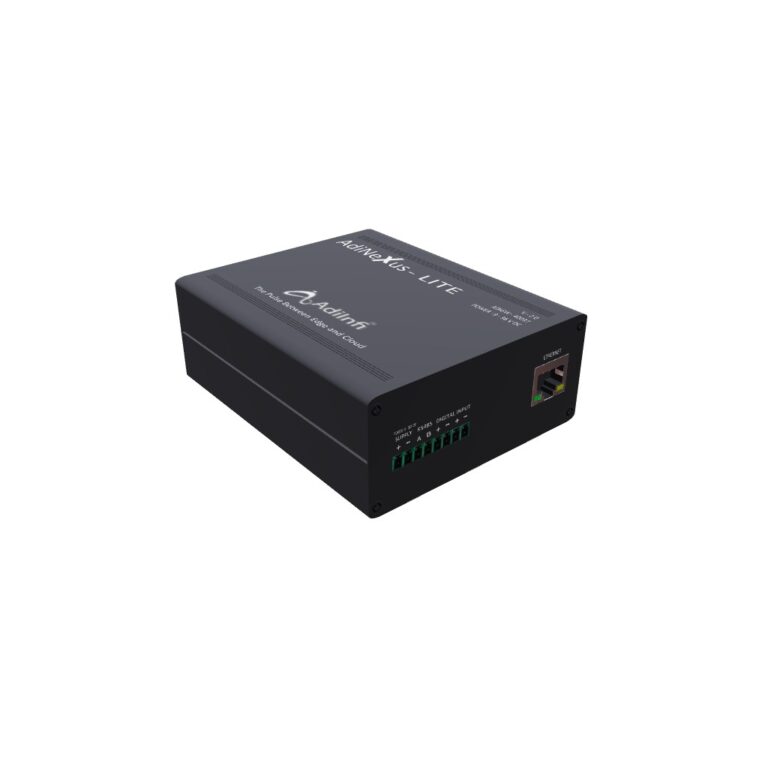
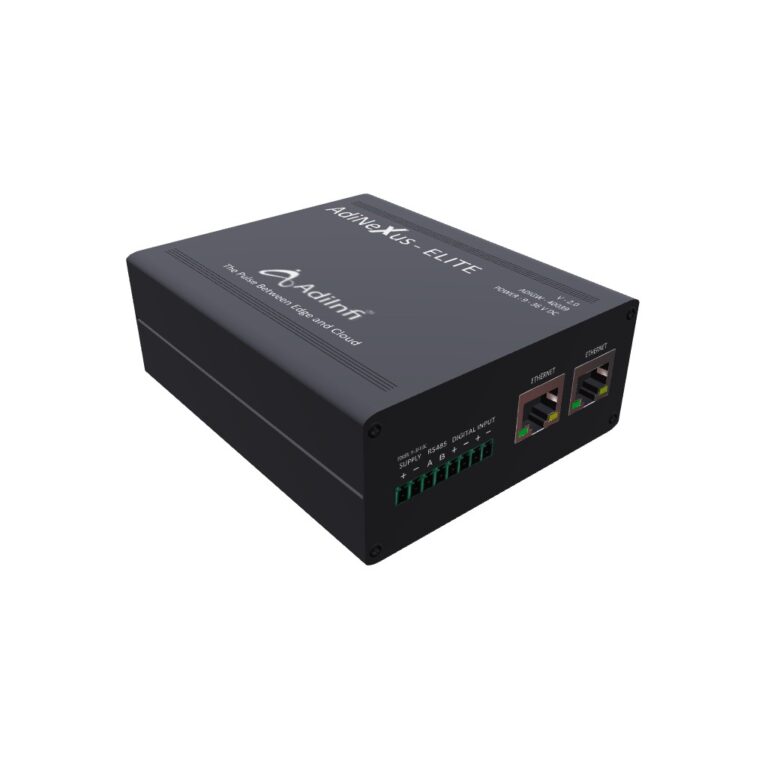
AdiNexus Industrial IoT Gateway was deployed as the core connectivity and edge intelligence platform to modernize the Junagadh municipal water supply infrastructure and enable seamless integration between field assets and the centralized monitoring system.
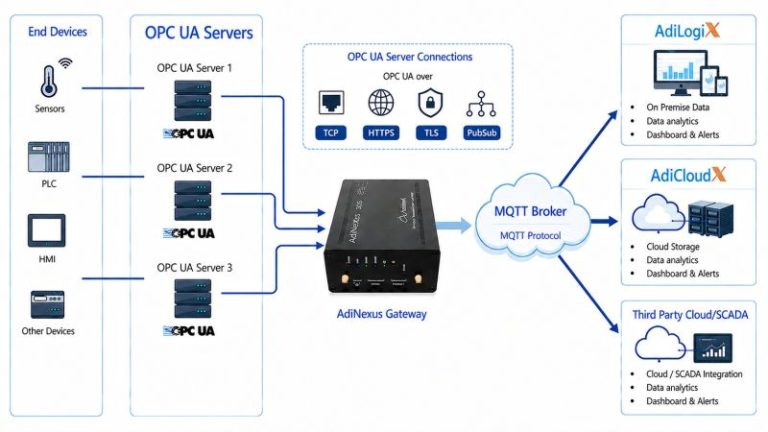
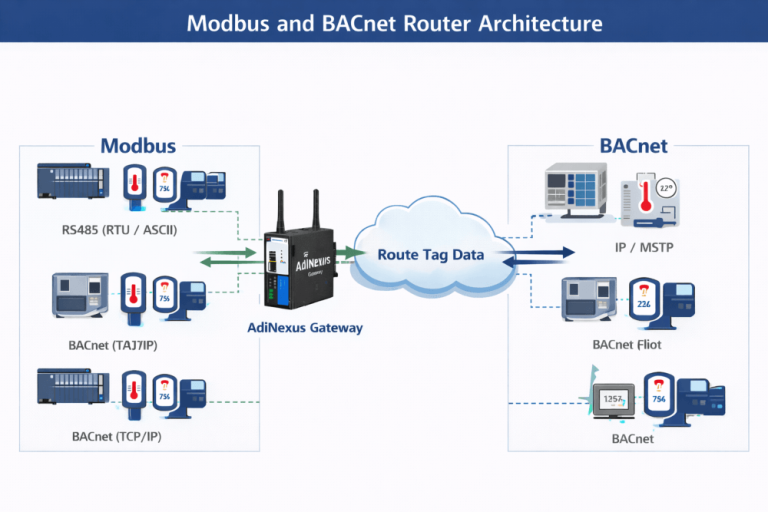
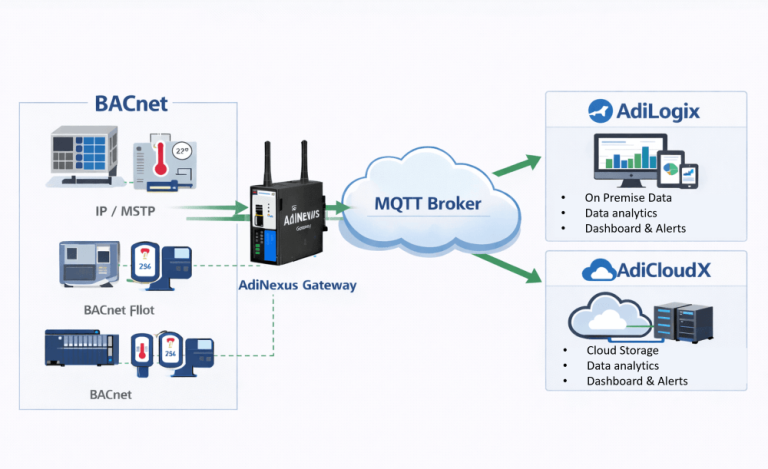
The solution established a secure and reliable communication layer across the entire water distribution network, connecting pumping stations, reservoirs, flow meters, pressure monitoring systems, PLCs, RTUs, and field sensors. By acting as an intelligent edge gateway, AdiNexus enabled real-time data collection, protocol conversion, local processing, and secure transmission of operational data to the AdiCloudX cloud platform.
Industrial data from distributed field devices is continuously acquired by AdiNexus, where it is validated, buffered, and processed at the edge before being securely transmitted to the central SCADA platform. This architecture ensures uninterrupted data availability, reliable communication, and improved operational visibility across the entire water supply network.
Why Choose AdiNexus Industrial IoT Gateway
AdiNexus Industrial IoT Gateway was deployed as the central connectivity layer for the municipal water distribution network, enabling seamless integration of field assets, intelligent data acquisition, and reliable communication between remote infrastructure and the centralized monitoring platform.
It enabled the municipality to:
- Monitor pumping stations in real time
- Connect flow meters, pressure sensors, reservoirs, PLCs, and RTUs
- Collect and transmit operational data automatically
- Monitor water flow, pressure, and reservoir levels
- Receive instant alarms and event notifications
- Store historical data for analysis and reporting
- Access live data through web-based dashboards
- Monitor multiple sites from a single platform
- Ensure secure and reliable edge-to-cloud connectivity
This helped improve operational visibility, reduce manual effort, and enhance overall water distribution efficiency.
Conclusion
The implementation of AdiNexus transformed the Junagadh water distribution network into a connected and intelligent water management system by providing reliable communication between field assets and the centralized monitoring platform.
With real-time data collection, seamless connectivity between pumps, reservoirs, flow meters, and sensors, and secure edge-to-cloud communication, the municipality gained better visibility and control over its water infrastructure.
This case study demonstrates how AdiNexus Industrial IoT Gateway can help utilities modernize their operations, simplify infrastructure connectivity, improve monitoring capabilities, and build a scalable foundation for smart water management initiatives.